


Hermès Leather Types: Togo, Epsom & Clemence

Contents

In short: There is no single "best" Hermès leather — the right one depends on how you carry the bag, not on a ranking. Togo is the durable, low-maintenance daily choice; Epsom is the lightest and holds its shape and color longest, at the cost of a stamped grain that wears through at contact points; Clemence trades shape for a softer feel that improves with wear. For a first Hermès bag meant for regular use, Togo or Epsom is the sounder default; Clemence, Swift, and Chèvre suit buyers whose priorities point elsewhere.
Color, size, and hardware are all visible in a photograph. How a leather behaves after three years of being carried is not — which is why the question at our counter is almost never what Togo is, but which one to choose. This guide answers that directly, the way we would in person, before working through the full catalogue below.
What Are the Main Hermès Leather Types?
Hermès works with roughly a dozen leathers across its handbag range, but nine account for nearly everything a buyer in Tokyo will encounter: Togo, Epsom, Clemence, Swift, Chèvre (Mysore and Chamkila), Box Calf, Evercolor, Négonda, and Barenia. Each is bred and finished for a different balance of weight, structure, and durability, so no single leather wins on every measure at once — the chart below compares them directly.
Hermès leather types chart: grain, weight, durability, and resale demand at a glance.
| Leather | Grain Type | Weight | Scratch Resistance | Water Resistance | Availability in Tokyo | Appreciation Trend |
|---|---|---|---|---|---|---|
| Togo | Natural pebbled grain, bull calfskin | Medium-heavy | High — grain hides scuffs | Moderate | Consistently available | Stable; the resale benchmark across most models |
| Epsom | Embossed (stamped) grain, coated calfskin | Light | High, until the coating wears through at corners | Good | Consistently available | Strong, especially on structured Sellier and Constance builds |
| Clemence (Taurillon Clemence) | Natural, looser grain than Togo | Heaviest of the core three | Good — grain hides marks | Good | Consistently available | Stable, strongest on relaxed, everyday models |
| Swift | Smooth, fine natural grain, unembossed | Light | Low — marks and scuffs show readily | Moderate | Plentiful | Softer resale demand unless kept pristine |
| Chèvre (Mysore / Chamkila) | Fine cross-hatch grain, goatskin | Light | High — a naturally tough hide | Moderate | Harder to come by unused | Increasingly strong as supply tightens |
| Box Calf | Smooth, glossy, no grain pattern | Medium | Low — every mark shows | Low | Scarce; a few current-stamp pieces at a time | Strong collector premium on well-kept vintage pieces |
| Evercolor | Smooth calfskin, subtle sheen | Light-medium | Moderate | Moderate | Minor, occasional | Still developing; too new for an established pattern |
| Négonda | Heavily grained, matte bull calfskin | Medium | Good | High — the most water-resistant leather here | Minor but present | Stable, tied to Garden Party demand |
| Barenia | Smooth, vegetable-tanned, aniline finish | Medium | Develops a patina rather than resisting marks | Low — needs conditioning | Genuinely scarce; often none in stock at all | Strong; limited-edition pieces are actively chased |
Read this table as a decision aid, not a ranking. The leathers with the strongest scratch and water resistance — Epsom, Négonda, Chèvre — are not automatically the right choice, because durability trades off against weight, cost, or the softer character some buyers want. Togo, Epsom, and Clemence cover the majority of Birkins, Kellys, Constances, and Lindys you will see unused in Tokyo; Swift, Chèvre, and Box Calf are specialist choices layered on for color, longevity, or heritage character. The four questions below turn this chart into an actual recommendation.
How Do You Actually Choose? The Four Questions We Ask Across the Counter
Before recommending a leather, a Ginza concierge asks four questions, because the "right" answer changes with each one: how you will carry the bag day to day, whether you want it to look new in ten years or lived-in, whether weight matters to you, and whether a specific color is the reason you want the bag at all. Each question can point to a different leather — sometimes to opposite ones.
Will you carry it daily, or mostly for occasions?
Daily bags absorb rain, get bumped in crowds, and get set down on café floors without ceremony — Togo and Clemence are built for that, since their natural grain hides scuffs and both tolerate light rain better than a smooth leather does. Occasion pieces spend most of their life in a closet or on a chair at dinner, so Swift's vivid color and Box Calf's glossy finish become the better trade, since marking matters far less when a bag rarely brushes against a doorway or a stroller.
Do you want the bag to look new in ten years, or to look lived-in?
This is where the two goals conflict — a bag cannot both hold a crisp, unchanged shape forever and develop the softened character some owners want, and no leather does both. Epsom is the shape-retention answer: its structure barely moves over years of use, which is why Constance and Kelly Sellier buyers reach for it. Clemence, Barenia, and Box Calf are the opposite answer — they soften, darken slightly at the corners, and develop a patina that makes the bag feel like it belongs to its owner.
Does the bag's weight matter to you?
Straightforward, and consistently underestimated: Epsom, Swift, and Chèvre are the lightest leathers here, and Clemence is the heaviest of the core three. On a Picotin or a Kelly 25 the difference barely registers. On a Birkin 35 carried daily, it is the difference between a bag you take out each morning and one that stays on the shelf after the first week.
Is color the reason you want this particular bag?
If a specific saturated shade — a bright orange, a hot pink, a strong red — is what is drawing you to a piece, leather choice narrows quickly. Swift and Epsom hold pigment most evenly and read as the most vivid in person, while Togo's natural grain and Clemence's looser texture both soften a saturated color rather than showing it at full strength.
What Is Togo Leather, and Who Should Choose It?
Togo is a natural pebbled-grain calfskin Hermès introduced in 1997, made from bull hide and finished without embossing, so the grain pattern on any given bag is unique to that hide. It is the house's most common leather across the Birkin, Kelly, and Constance ranges, and the default recommendation for a first Hermès bag a buyer intends to use often.
Some Togo hides carry veining — fine natural lines running through the grain, most visible in lighter colors under close light. This is a characteristic of the hide, not a manufacturing flaw, and it has no effect on the leather's durability. A buyer who spots veining on an otherwise unused piece is looking at a normal feature of natural leather, not grounds to question the bag.
Togo suits a buyer who wants one bag doing daily work — rain, crowded trains, being set down without a second thought — and who is comfortable with visible, natural grain over a uniform, polished look. It is the wrong choice for a buyer chasing the lightest possible bag (Epsom and Chèvre both weigh less) or a glossy, formal finish (Box Calf and Swift read as more polished). Togo is most often built in Retourné (soft, unstructured) construction, part of why it slouches comfortably rather than holding a crisp edge.
What Is Epsom Leather, and What Is the Trade-Off?
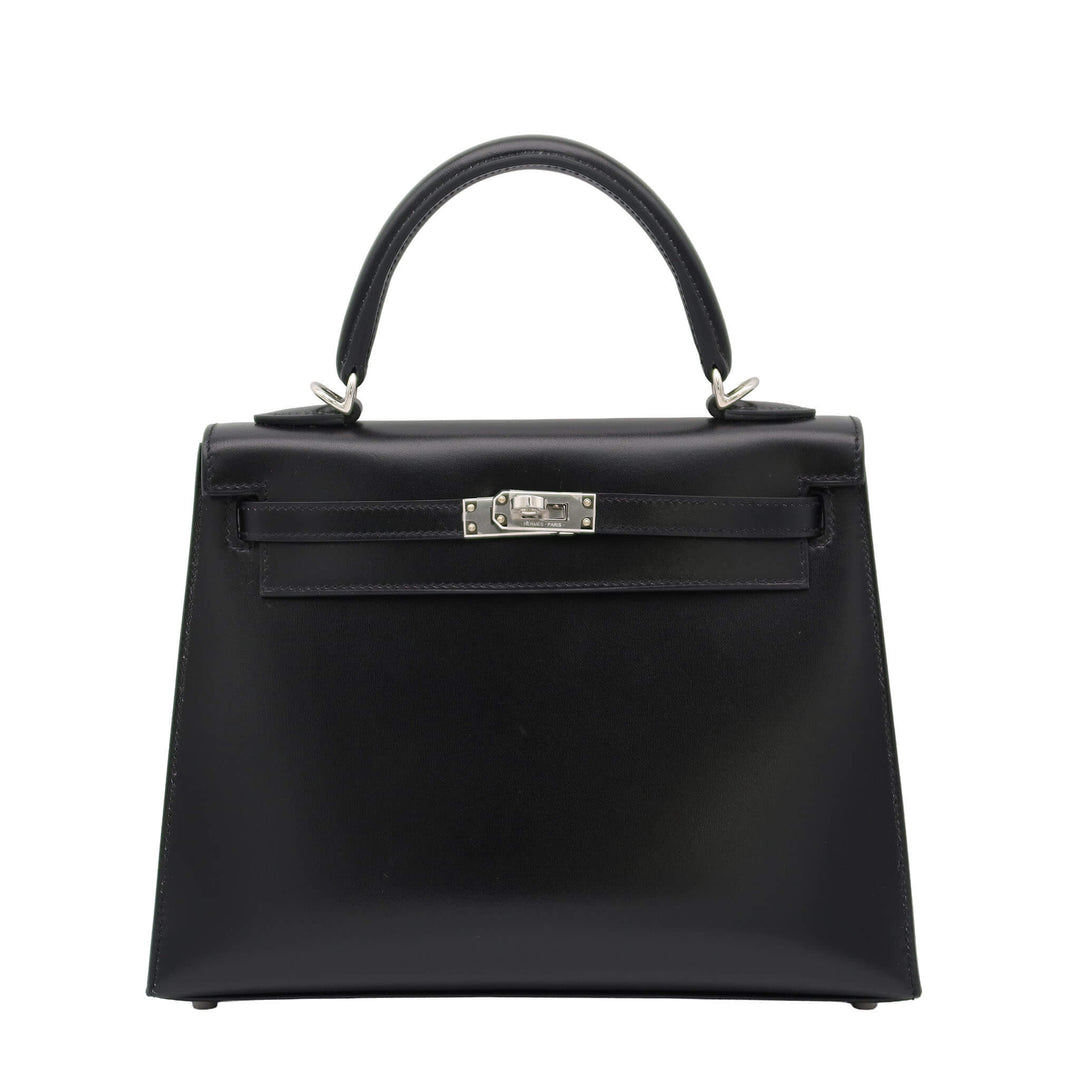
Epsom is a lightweight calfskin with a grain pattern embossed onto the hide under heat and pressure, rather than occurring naturally — Hermès introduced it in 2004 to succeed the discontinued Courchevel leather. Its coated surface holds a crisp, structured shape and saturated color better than any other core leather, which is why Constance and Kelly Sellier bags are so often built in it.
The honest trade-off is this: because Epsom's grain is stamped onto the surface rather than being the hide's own texture, it wears away at contact points — the base of the handles, the corners that meet a table edge, the underside that rests on a lap. Once that embossed texture rubs through, it is very difficult to restore invisibly — matching both the stamped grain and the color exactly is close to impossible, and most owners find the smoothed patch effectively permanent.
Epsom rewards a buyer who wants the bag to hold its shape and color rather than soften into something else — and who accepts wear at those contact points as the price of it. It is the leather for someone optimizing structure over character, not for someone expecting a bag that looks untouched forever. It is the wrong choice for a buyer who wants a bag to visibly soften and age; Clemence, Barenia, or Box Calf serve that instinct instead. One point of confusion is worth settling here: Epsom's predecessor was Courchevel, not Togo — the two are unrelated leathers, addressed further in the FAQ below.
What Is Clemence Leather, and How Is It Different From Togo?
Clemence — properly Taurillon Clemence — is a natural-grain bull calfskin with a looser, larger grain pattern than Togo and no embossing. It is the heaviest of Hermès's three core leathers, the softest to the touch straight out of the box, and the standard leather for the house's more relaxed models, including the Lindy, the Evelyne, and the Picotin.
Clemence slouches, and that single trait is both its main selling point and its most common complaint, depending on what the buyer actually wanted. On a Lindy or an Evelyne, a bag that softens and drapes is exactly the point — it is why the leather was chosen for those models in the first place. On a structured shape like a Kelly Sellier, that same slouch reads as a loss of the crisp silhouette the construction was built to hold, which is why Clemence rarely appears in Sellier builds at all.
Togo or Clemence — how do you tell them apart?
Togo and Clemence are both natural-grain bull calfskin. You may have read that one comes from female hide and the other from male; Hermès has never confirmed it, and it is not what separates the two in the hand. Togo is lighter, shows fine natural veining, carries a thinner grain, and slouches only a little; Clemence is heavier, does not vein, carries a larger grain, and slouches considerably more. Side by side, the fastest tell is weight and drape — the heavier, softer one is Clemence.
Choose Clemence for a bag that will absorb daily wear and relax into a soft, personal shape — right for a Lindy, an Evelyne, or a Picotin carried most days. Skip it if weight is a concern on a larger size, or if the bag's structure — a Kelly Sellier, a Constance — depends on a crisp edge rather than softening.
What Is Swift Leather, and Why Does It Mark So Easily?
Swift is a smooth, fine-grained calfskin with no embossing, prized for holding the most saturated, vivid colors in Hermès's palette and for a soft, velvety hand-feel. Because the surface has no grain to hide imperfections, it marks, scuffs, and shows fingernail scratches more readily than Togo, Epsom, or Clemence — the trade a buyer accepts for that color depth.
Swift is delicate, not rare — two separate claims that get conflated. It marks easily and asks more care from its owner, but Hermès produces it in real volume, and it appears regularly across Birkins, Kellys, and Kelly Pochettes in Tokyo's unused market. A buyer told that Swift is "hard to find" is hearing the wrong reason; the real constraint is what the leather asks of you after purchase, not how often it turns up.
Swift rewards a buyer chasing a specific vivid shade for a bag that lives mostly indoors and comes out for occasions rather than daily commuting. It is the wrong leather for someone who wants to set a bag down without thinking, carry it through rain, or hand it to a child — Togo or Clemence absorb that treatment far better.
What Is Chèvre Leather (Mysore, Chamkila and Coromandel)?
Chèvre is Hermès's goatskin, prized for a fine cross-hatch grain and a durability disproportionate to its light weight — a tough hide that resists scuffing better than most calfskins. Hermès's primary goatskin today is Chèvre Mysore, with Chèvre Chamkila — a smoother, higher-shine variant introduced in 2018 — as the second current option. Chèvre de Coromandel, the coarser variant the house once favored, now surfaces almost exclusively through vintage channels.
Both variants are genuinely limited rather than merely fashionable — a supply constraint, not a marketing story — and unused pieces are harder to come by than Togo, Epsom, or Clemence. Chèvre suits a buyer prioritizing durability who is willing to wait for the right piece — including on a Mini Kelly, where it turns up only occasionally alongside that model's dominant Epsom and a long tail of other skins. It is not the leather for someone who needs a guaranteed same-day match on a specific color.
What About Box Calf and Other Heritage Leathers?
Box Calf is a smooth, glossy calfskin with no visible grain — Hermès's oldest leather, in use since the 1890s — prominent through the mid-20th century and rarely produced today; it reads as the most formal of the leathers covered here, and it marks and scuffs more readily than any of them.
Box Calf is still made, but in small enough volume that it surfaces a few pieces at a time rather than as a standing option — worth asking after rather than assuming. The vintage market remains the deeper source, and it is where a collector chasing a specific production year and blind stamp will usually end up, since current stock turns on whatever happens to have come in. Ardennes is a related heritage-era leather that surfaces occasionally through the same vintage channels.
Which Leather Is Better, Togo or Epsom?
Neither is objectively better — Togo and Epsom optimize for different things, and the honest answer depends on how you use the bag. Togo is heavier, shows natural veining, and softens gradually with rain and daily handling. Epsom is lighter, holds a crisp structured shape and saturated color, and wears through at the handle base and corners once its embossed grain rubs away.
| Criterion | Togo | Epsom |
|---|---|---|
| Grain | Natural, unique per hide | Embossed, uniform |
| Weight | Medium-heavy | Light |
| Shape retention | Softens over time | Holds its shape far longer |
| Wear at contact points | Natural veining, not damage | Effectively permanent |
| Typical construction | Retourné (soft) | Sellier (structured) |
| Best for | Daily use, low-maintenance owners | Structured silhouettes, color-focused buyers |
For a first Hermès bag carried most days, Togo is the more forgiving choice — it tolerates rain, rough handling, and an inattentive owner better than any embossed leather can. For a buyer who wants a structured Kelly Sellier or Constance to look unchanged years from now, and who accepts wear at the corners as the cost, Epsom is the better leather. Neither answer is wrong; they answer different questions.
Which Leather Suits Which Hermès Model?
Leather and model are not independent choices — Hermès pairs specific leathers with specific bags for structural reasons, so the practical question is rarely "which leather is best" in the abstract but "which leather does this model actually come in." The table below routes each core model to the leather it is realistically found in, unused, in Tokyo.
| Model | Signature leather(s) | Notes |
|---|---|---|
| Kelly & Birkin | Togo, Epsom, Swift, Chèvre, Box Calf | Widest leather range of any Hermès bag; construction (Sellier vs. Retourné) narrows it further — see our Kelly vs. Birkin availability guide |
| Constance | Epsom, with Swift and Chèvre Mysore also in circulation | Epsom's structure supports the bag's rigid silhouette and clasp, which is why it dominates — see our Hermès Constance guide |
| Lindy | Clemence, with Swift second | Slouched shape depends on a soft, grainy leather — see our Hermès Lindy guide |
| Picotin & Evelyne | Clemence, with Epsom or Swift in seasonal editions | Both models are built around Clemence's softness — see our Picotin & Evelyne guide |
| Garden Party | Négonda, with Togo and a canvas-bodied version also in current production | Négonda is the model's defining leather — water-resistant, matte, built for a tote handled roughly; the canvas version trades some of that resilience for a lighter, more casual read — see our Hermès Garden Party guide |
| Herbag | Canvas body with Vache Hunter leather trim | Leather is a supporting material, part of the model's accessible price tier — see our Hermès Herbag guide |
| Mini Kelly | Epsom, with Box Calf, Chèvre Mysore and Swift in smaller numbers | Epsom accounts for about half of what comes through; the rest is a long tail — see our Hermès Mini Kelly guide |
The pattern is consistent: soft, relaxed bags pair with Clemence, structured bags pair with Epsom, and the Kelly and Birkin sit outside it entirely. Hermès Kelly leather types alone span nearly the full catalogue above, in both Sellier and Retourné construction, which is why the model is the hardest one to give a single leather recommendation for.
What Should You Expect to Pay for These Leathers in Tokyo?
Leather choice moves price only modestly within the same model, size, and hardware — color rarity and construction generally move the number more than the leather itself does. What changes by leather is which models it appears on at all, so the more useful question is what a given model costs in its defining leather, not what "Epsom" costs as an abstract category.
| Model & leather | Typical Tokyo price (unused, tax inclusive) |
|---|---|
| Kelly 25 Sellier, Epsom | ¥3,520,000–5,115,000 (approx. $22,120–$32,140 USD) |
| Kelly Pochette, Swift | ¥2,970,000–4,730,000 (approx. $18,660–$29,720 USD) |
| Constance 18 / Mini, Epsom | ¥1,870,000–2,860,000 (approx. $11,750–$17,970 USD) |
| Lindy 26 / Mini Lindy, Clemence | ¥1,100,000–2,310,000 (approx. $6,910–$14,510 USD) |
| Picotin 18 / Evelyne, Clemence | ¥473,000–1,078,000 (approx. $2,970–$6,770 USD) |
| Garden Party, Négonda | ¥770,000–1,375,000 (approx. $4,840–$8,640 USD) |
Exchange rate: 1 USD ≈ 159.16 JPY. Individual prices vary with color, hardware, and condition; confirm current stock with our concierge team before you travel.
Togo sits in the same broad price tier as Epsom and Clemence on shared models like the Kelly and Birkin — Hermès does not price a bag differently for the leather alone, so color and condition separate two pieces more than the leather choice does. Chèvre and Box Calf command a premium over that tier, reflecting scarcity rather than the material's cost to produce.
For US, Singaporean, Hong Kong, and Australian buyers, the current strength of those currencies against the yen is a natural advantage layered on top of Japan's 10% consumption-tax exemption for international visitors. See our guide to Japan's tax-free shopping rules for the current mechanics, and our Tokyo vs. home-market price comparison for what those two factors are worth against an official-boutique price at home.
Frequently Asked Questions
Q. Which Hermès leather is the best?
A. There is no single best leather. Togo balances durability and low maintenance, Epsom holds its structure and color longest but its stamped grain wears through at contact points, and Clemence trades shape for a softer, slouchier feel. The right choice depends on how you carry and care for the bag.
Q. Is Courchevel the same as Togo leather?
A. No — a common mix-up. Courchevel was a separate embossed calfskin that Hermès discontinued and replaced with Epsom in 2004; Togo, introduced in 1997, is an unrelated natural-grain leather still in production. A vintage Courchevel piece carries an older blind stamp and is no longer part of the current catalogue.
Q. Which leather is better, Evercolor or Togo?
A. They serve different bags rather than competing directly. Evercolor is a smooth, subtly sheened calfskin introduced in 2013, used mainly on structured pieces like the Bolide 1923, Kelly Danse, and Kelly Messenger; Togo is the natural pebbled-grain leather found across the wider Birkin, Kelly, and Constance range. Togo is the more durable daily choice; Evercolor gives a smoother, dressier finish.
Q. What is the hierarchy of Hermès bags?
A. Birkin and Kelly are quota bags everywhere; the Constance is informally treated the same way in many boutiques, though its quota status is not fixed policy and varies by boutique and region. Non-quota models like the Picotin, Evelyne, Garden Party, and Herbag sit outside that system entirely, though leather quality does not follow the same hierarchy. See our guide to Hermès' most accessible bags.
Q. Is veining on Togo leather normal, or is it a defect?
A. It is normal. Veining is present in the hide from the start rather than appearing with wear, visible as fine lines through the grain and most noticeable in lighter colors. It has no effect on durability and is not grounds to treat an unused piece as flawed.
Q. Is Swift leather rare?
A. No — Swift is delicate, not scarce. It marks and scuffs more readily than Togo, Epsom, or Clemence, a genuine care consideration, but Hermès produces it in real volume and it appears regularly in Tokyo's unused market.
Conclusion
Togo, Epsom, and Clemence cover most of what a buyer in Tokyo will be choosing between, with Swift, Chèvre, and Box Calf answering narrower needs further down the list. No single leather is objectively superior — each reflects a different approach to durability, structure, and aging. The right choice depends on how you intend to carry and care for the piece over time. Every unused Hermès piece at Ginza Celia is authenticated by our own appraisers before sale, drawing on more than a decade of expertise, and sold under Japan's Second-hand Dealer License No. 305562116803. Ginza Celia is an independent luxury boutique and is not affiliated with Hermès.
Connect with Our Concierge
Not sure which leather fits how you plan to use the bag? Tell our concierge team your target model, size, and how you'll carry it, and we will point you toward the leather — and the specific piece — that matches.
- Visit Us: Ginza Celia Boutique — Google Maps
- Inquire via WhatsApp: Contact Our Concierge
- Message us on LINE: Add Our LINE Concierge
- Browse New Arrivals: View the Unused Collection



 LINE
LINE WhatsApp
 WeChat